


News
Jazz in the key of life
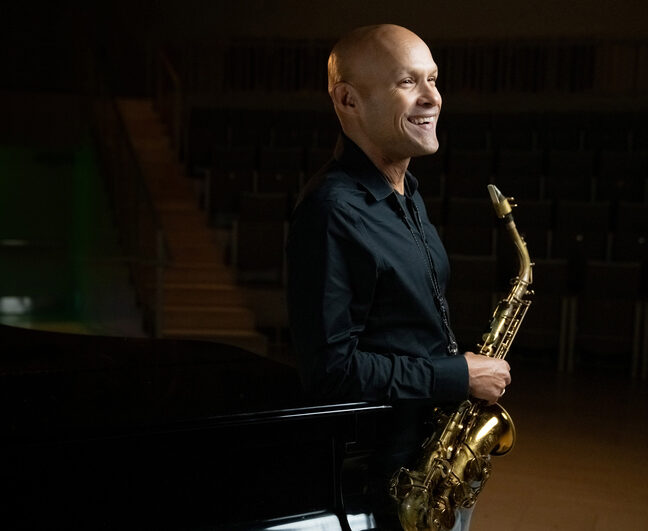
Saxophonist Miguel Zenón, a GRAMMY-winning MIT faculty member, creates a distinctive blend of jazz and traditional Puerto Rican music.
It is not hard to find glowing reviews of saxophonist Miguel Zenón, a creative jazz artist whose compositions incorporate musical elements from his native Puerto Rico.
For instance, The Jazz Times called “Jibaro,” Zenón’s breakthrough 2005 album, “profound yet joyful.” The New York Times called the same music “strong and light,” adding that we have “rarely seen a jazz composer step forward with a project so impressively organized, intellectually powerful and well played from the start.”
In 2009, when Zenón won a prestigious MacArthur Fellowship, the MacArthur Foundation called Zenón’s work “elegant and innovative,” with “a high degree of daring and sophistication.” In 2012, The New York Times reviewed another Zenón work, “Puerto Rico Nació en Mi: Tales From the Diaspora,” by calling the music “deeply hybridized and original, complex but clear.”
As you may have noticed, these notices all contain multiple descriptive terms. That’s because Zenón’s work is many things at once: jazz, combined with other musical genres; technically rigorous, and supple; novel, yet steeped in tradition. Indeed, Zenón has always seen jazz as being multifaceted.
“What I discovered, when I first encountered jazz, was this idea that you were using improvisation to portray your personality directly to your listeners,” Zenón explains. “And it was connected to a very interesting and intricate improvisational language. That provided something I hadn’t encountered in music before, this idea that you could have something personal and heartfelt walking hand in hand with something that was intellectual and brainy. That balance spoke to me.”